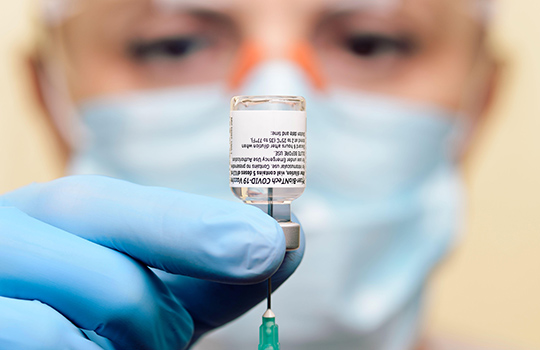
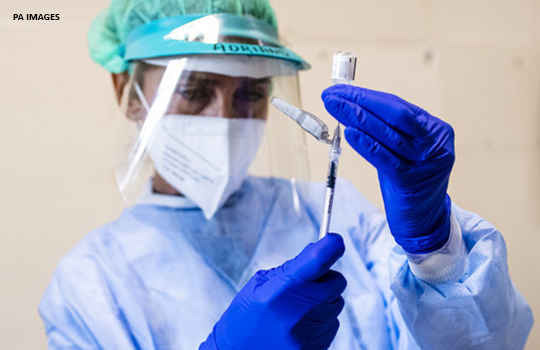
In the first week of classes, 304 undergraduates, 45 graduate students and 15 employees tested positive for COVID-19. All but eight of these individuals were vaccinated, and the vast majority of them are asymptomatic. A small number have minor, cold- and flu-like symptoms, and none have been hospitalized, according to the university.
Monthly Archives: August 2021
Are COVID vaccines for children under 12 in their best interest — or just everyone else’s?

Kim Iversen: CDC Used Misleading Data For “Pandemic of The Unvaccinated

New safety concerns identified for 1 in 3 FDA-approved drugs

Kim Iversen: BIG PHARMA’S Ties To The FDA Should Be Questioned
Over a quarter of all FDA approved drugs later — sometimes years later — are taken off the market because they find out they’re actually not so safe or they discover serious side effects that require a large, black box warning warning to be applied on the packaging.

How vaccines work
Protection from Infection or Protection from Disease?
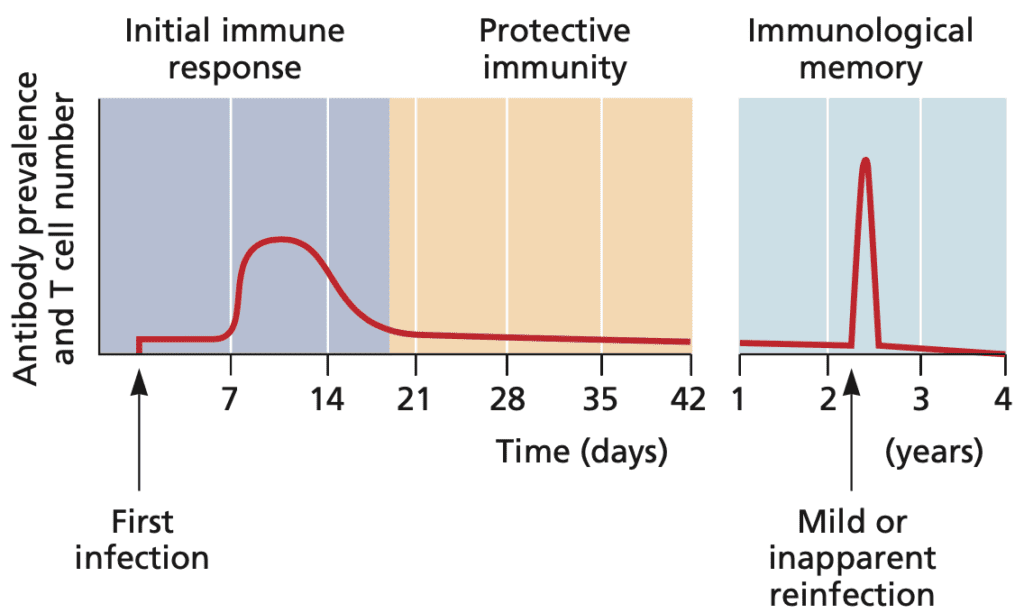
The memory response elicited by most human viral vaccines does not protect against reinfection, but rather against the development of disease. An individual may be exposed repeatedly to viruses and never be aware of it, because the memory response eliminates the virus before signs and symptoms develop. After vaccination with inactivated poliovirus vaccine, virus replication may take place in the intestine, but effectively blocks the development of poliomyelitis. On the other hand, the human papillomavirus vaccine is over 90% effective at blocking infection. Consequently the HPV vaccine induces sterilizing immunity.
Which common vaccines prevent transmission?
The ideal vaccine would prevent infection through complete sterilizing immunity.
Sterilizing immunity means that the immune system is able to stop a pathogen, including viruses, from replicating within your body.
This typically happens when immune cells in the body are able to bind to the pathogen in places that prevent it from being able to enter a cell where it can start making copies of itself. Some of these immune cells may produce sterilizing antibodies, which are proteins that recognize specific proteins and structures on the surfaces of pathogens.
To achieve sterilizing immunity, your body needs to produce enough neutralizing antibodies and it needs to be able to do so in the long term. Ideally, it leads to life-long immunity.
| Virus | Does the vaccine prevent transmission? | Notes | Source |
|---|---|---|---|
| Diphtheria | No | Miller et al. suggests that diphtheria vaccination prevents symptomatic infections, though it does not prevent carriage or spread of diphtheria. This hypothesis is based on throat swabs of 306 school children and staff during an outbreak investigation in Eglin Texas. C. diphtheria was isolated from 104 (34%) individuals of which 15 (14%) were cases and 89 (86%) were carriers. Of the 104 positive, 73 were fully, 28 inadequately and 3 not immunized. The presence of the phage (referring to the phage that induces toxin production in the bacterium) is thought to confer survival advantage to the bacterium by increasing the probability of transmission; transmission may be facilitated by local tissue damage resulting from the toxin. 1,10,11 The United States Immunization Practices Advisory 3Commitee (ACIP) states, that immunization does not eliminate carriage of C. diphtheriae in the pharynx, nose or on the skin.1 | link |
| Haemophilus influenzae type B (Hib) | No | Hib bacteria can cause many types of invasive disease, including meningitis, pneumonia, cellulitis (skin infection), septic arthritis (joint infection) and epiglottitis (infection of the epiglottis, causing obstruction or closing of the windpipe). Thus, although it’s sometimes said that the Haemophilus influenzae type b vaccine is given to “protect against Hib,” this phrasing is not technically correct. The vaccine protects against the diseases caused by Hib, which are numerous and can be severe. Collectively, these Hib-caused infections are referred to generally as “Hib disease.” | link |
| Hepatitis A | Yes | Approximately 99-100 percent of persons vaccinated with hepatitis A vaccine will develop long-lasting immunity. | link |
| Hepatitis B | Yes | The good news is that hepatitis B is vaccine preventable. This means that after you complete the vaccine series, you cannot contract hepatitis B through any modes of transmission; you are protected for life! | link |
| Herpes Zoster (Shingles) | Yes | e shingles vaccine, my doctor said to stay away from my pregnant daughter and my grandchildren. Can you tell me why? The virus that causes shingles — varicella-zoster virus — is also the virus that causes chickenpox. Your doctor's concern may stem from reports of rare cases in which people with no immunity to chickenpox — meaning they've never had chickenpox or the chickenpox vaccine — have caught varicella-zoster virus from children recently vaccinated with the chickenpox vaccine. However, there are no documented cases of the varicella-zoster virus being transmitted from adults vaccinated with the shingles vaccine, according to the Centers for Disease Control and Prevention (CDC). | link |
| Human Papillomavirus (HPV) | No | If you get vaccinated now, it won't protect your partner, though. But your partner can be vaccinated too. People of all genders should be vaccinated against HPV to help prevent the spread of the disease. Even if you and your partner have both been vaccinated, always use condoms for any type of sex (oral, anal, or vaginal). Condoms help prevent the spread of the types of HPV that are not covered by the vaccine. And, of course, condoms also help protect against other sexually transmitted diseases (STDs). | link |
| Influenza | No, but it helps | When you get vaccinated, you help protect others as well by reducing the spread of the influenza virus. | link |
| Pandemic Influenza | link | ||
| Measles | Yes | Herd immunity in humans rarely — if ever — develops from natural infection. Measles, the best-known example, was brought under control by vaccination alone. At 95% coverage, people who can’t get shots because of age or health conditions are protected by the herd effect. But measles rarely mutates. The same vaccine has remained effective for decades. The measles shot also generates what’s called sterilizing immunity, preventing the virus from replicating in the human body. With the COVID-19 vaccines, immunity is more of a continuum than an on-off switch, says UW Medicine immunologist Marion Pepper. And that can be another problem for herd immunity. Even though they’re protected from severe illness, vaccinated people may still get mild infections and pass the virus to others. | link |
| Meningococcal Disease | link | ||
| Mumps | Mixed | History illustrates the remarkable public health impact of mass vaccination, by dramatically improving life expectancy and reducing the burden of infectious diseases and co-morbidities worldwide. It has been perceived that if an individual adhered to the MMR vaccine schedule that immunity to mumps virus (MuV) would be lifelong. Recent mumps outbreaks in individuals who had received two doses of the Measles Mumps Rubella (MMR) vaccine has challenged the efficacy of the MMR vaccine. However, clinical symptoms, complications, viral shedding and transmission associated with mumps infection has been shown to be reduced in vaccinated individuals, demonstrating a benefit of this vaccine. Therefore, the question of what constitutes a good mumps vaccine and how its impact is assessed in this modern era remains to be addressed. | link |
| Pertussis (Whooping Cough) | No | None of the current vaccines induce sterilizing immunity and limit circulation of B. pertussis. Therefore, new vaccines are needed that protect both against disease and infection. | link |
| Pneumococcal Disease | Yes | Colonization of the human nasopharynx by pneumococcus is extremely common and is both the primary reservoir for transmission and a prerequisite for disease. Current vaccines targeting the polysaccharide capsule effectively prevent colonization, conferring herd protection within vaccinated communities. | link |
| Polio | link | ||
| Rotavirus | link | ||
| Rubella (German measles) | link | ||
| Tetanus (Lockjaw) | No | Tetanus is a vaccine-preventable disease caused by a neurotoxin produced by the anaerobic bacterium Clostridium tetani. Tetanus bacteria are found in spore form in soil, dust, manure, and have also been detected in the intestines of animals and humans. | link |
| Varicella (Chickenpox) | No | The lack of sterilizing immunity provided by VZV vaccines has not prevented them from being safe and effective. | link |
“Imagine a vaccine so safe you have to be threatened to take it,
for a disease so deadly you have to be tested to know you have it.”