Tag Archives: mRNA
Nobel Laureate Warns: COVID Vaccine is Creating Variants
For more than a year, French virologist Dr. Luc Montagnier—recipient of the 2008 Nobel Prize in Medicine for his discovery of the human immunodeficiency virus (HIV)—has exposed the dangers of the COVID-19 vaccines. He reveals that epidemiologists recognize but are “silent” about the phenomenon known as “Antibody Dependent Enhancement” that is currently driving the pandemic.

Wikipedia removes all references to Dr. Robert W. Malone
This June 2021 cached copy of the Wikipedia entry for RNA Vaccine mentions Robert Malone 9 times.
In 1989, Robert W. Malone, P. Felgner, et. al. developed a high-efficiency in-vitro and in-vivo RNA transfection system using cationic liposomes, which were used “to directly introduce RNA into whole tissues and embryos”, as well as various cells types. The term and idea of “RNA as a drug” is first described in this paper.
RNA vaccine - Wikipedia
A ribonucleic acid (RNA) vaccine or messenger RNA (mRNA) vaccine is a type of vaccine that uses a copy of a natural molecule called messenger RNA (mRNA) to produce an immune response.[1] The vaccine transfects molecules of synthetic RNA into immunity cells. Once inside the immune cells, the vaccine’…
Around that time Dr. Malone became known as a outspoken critic of mRNA vaccines. His name was scrubbed and does not appear even once in the same Wikipedia entry today.
RNA vaccine - Wikipedia
A ribonucleic acid (RNA) vaccine or messenger RNA (mRNA) vaccine is a type of vaccine that uses a copy of a molecule called messenger RNA (mRNA) to produce an immune response.[1] The vaccine transfects molecules of synthetic RNA into immune cells, where the vaccine functions as mRNA, causing the cel…
Pfizer > waning effectiveness not because of Delta
Evidence gathered in studies conducted both in Israel and in the United States by Kaiser Permanente Southern California and the CDC indicate that the observed decrease of vaccine effectiveness against COVID-19 infections is primarily due to waning of vaccine immune responses over time rather than a result of the Delta variant escaping vaccine protection.
PDF (page 46)
UK > JCVI issues updated advice on COVID-19 vaccination of children aged 12 to 15
The assessment by the Joint Committee on Vaccination and Immunisation (JCVI) is that the health benefits from vaccination are marginally greater than the potential known harms. However, the margin of benefit is considered too small to support universal vaccination of healthy 12 to 15 year olds at this time.
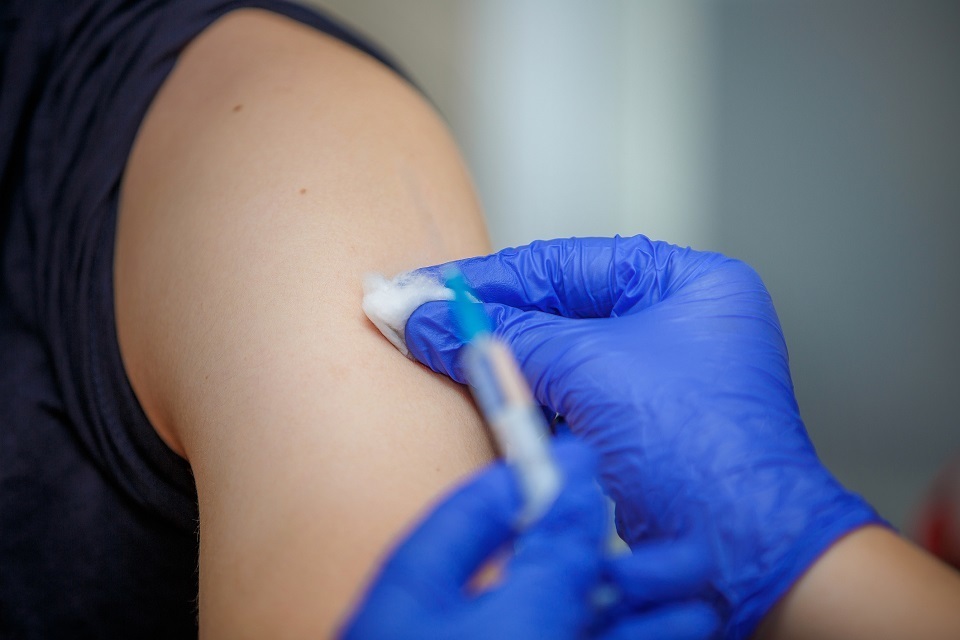
Do mRNA vaccines stay in the shoulder or travel throughout the bloodstream?
…Compare this to what happens in vaccination. The injection is intramuscular, not into the bloodstream. That’s why a muscle like the deltoid is preferred, because it’s a good target of thicker muscle tissue without any easily hit veins or arteries at the site of injection. The big surface vein in that region is the cephalic vein, and it’s down along where the deltoid and pectoral muscles meet, not high up in the shoulder. In earlier animal model studies of mRNA vaccines, such administration was clearly preferred over a straight i.v. injection; the effects were much stronger. So the muscle cells around the injection are hit by the vaccine (whether mRNA-containing lipid nanoparticles or adenovirus vectors) while a good portion of the remaining dose is in the intercellular fluid and thus drains through the lymphatic system, not the bloodstream. That’s what you want, since the lymph nodes are a major site of immune response. The draining lymph nodes for the deltoid are going to be the deltoid/pectoral ones where those two muscles meet, and the larger axillary lymph nodes down in the armpit on that side.
Now we get to a key difference: when a cell gets the effect of an mRNA nanoparticle or an adenovirus vector, it of course starts to express the Spike protein. But instead of that being assembled into more infectious viral particles, as would happen in a real coronavirus infection, this protein gets moved up to the surface of the cell, where it stays. That’s where it’s presented to the immune system, as an abnormal intruding protein on a cell surface. The Spike protein is not released to wander freely through the bloodstream by itself, because it has a transmembrane anchor region that (as the name implies) leaves it stuck. That’s how it sits in the virus itself, and it does the same in human cells. See the discussion in this paper on the development of the Moderna vaccine, and the same applies to all the mRNA and vector vaccines that produce the Spike. You certainly don’t have the real-infection situation of Spike-covered viruses washing along everywhere through the circulation. The Spike protein produced by vaccination is not released in a way that it gets to encounter the ACE2 proteins on the surface of other human cells at all: it’s sitting on the surface of muscle and lymphatic cells up in your shoulder, not wandering through your lungs causing trouble.
Some of the vaccine dose is going to make it into the bloodstream, of course.

Spike Protein Behavior
I’ve been getting a lot of questions in the last few days about several Spike-protein-related (and vaccine-related) topics, so I thought this would be a good time to go into them. There’s been a recent report about the vascular effects of the Spike protein alone (not coronavirus infection per se), a…